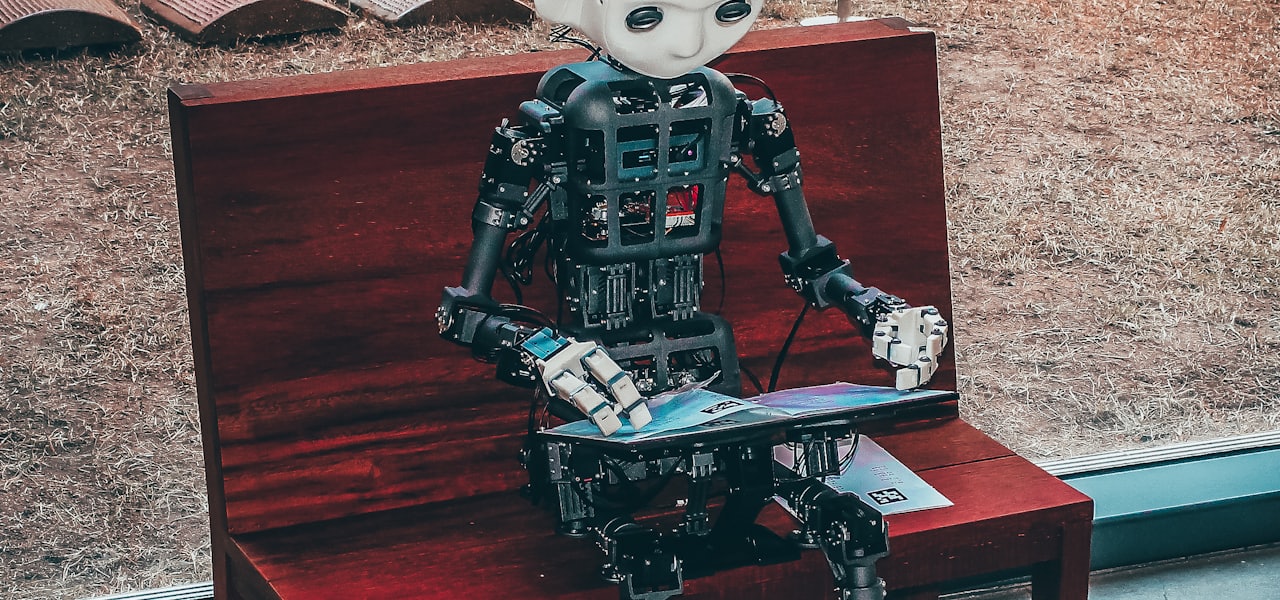
AI-assisted software development is the use of artificial intelligence (AI) to augment software development. It uses large language models (LLMs), AI agents and other AI technologies to assist software developers. It helps in a range of tasks of the software development life cycle, from code generation to debugging, editing, testing, UI design, understanding the code, and documentation. Agentic coding denotes the use of AI agents for software development. == Technologies == === Source code generation === Large language models trained or fine-tuned on source-code corpora can generate source code from natural-language descriptions, comments, or docstrings. Research on code-generation systems often evaluates generated programs by functional correctness, such as whether the output passes automated test cases, rather than by syntax alone. Such tools can be features or extensions of integrated development environments (IDEs). === Intelligent code completion === AI agents using pre-trained and fine-tuned LLMs can predict and suggest code completions based on context. According to Husein, Aburajouh & Catal in a 2025 literature review in Computer Standards & Interfaces, "LLMs significantly enhance code completion performance across several programming languages and contexts, and their capability to predict relevant code snippets based on context and partial input boosts developer productivity substantially." === Testing, debugging, code review and analysis === AI is used to automatically generate test cases, identify potential bugs and security vulnerabilities, and suggest fixes. AI can also be used to perform static code analysis and suggest potential performance improvements. == Limitations == Both ownership of and responsibility for AI-generated code is disputed. According to a report from the German Federal Office for Information Security, the use of AI coding assistants without careful oversight from experienced developers can introduce both minor and major security vulnerabilities, and any potential gain in productivity should be weighed against the cost of additional quality control and security measures. According to Deloitte, outputs from AI-assisted software development must be validated through a combination of automated testing, static analysis tools and human review, creating a governance layer to improve quality and accountability. == Vibe coding ==
Graphics processing unit
A graphics processing unit (GPU) is a specialized electronic circuit designed for digital image processing and to accelerate computer graphics, being present either as a component on a discrete graphics card or embedded on motherboards, mobile phones, personal computers, workstations, and game consoles. GPUs are increasingly being used for artificial intelligence (AI) processing due to linear algebra acceleration, which is also used extensively in graphics processing. Although there is no single definition of the term, and it may be used to describe any video display system, in modern use a GPU includes the ability to internally perform the calculations needed for various graphics tasks, like rotating and scaling 3D images, and often the additional ability to run custom programs known as shaders. This contrasts with earlier graphics controllers known as video display controllers which had no internal calculation capabilities, or blitters, which performed only basic memory movement operations. The modern GPU emerged during the 1990s, adding the ability to perform operations like drawing lines and text without CPU help, and later adding 3D functionality. Graphics functions are generally independent and this lends these tasks to being implemented on separate calculation engines. Modern GPUs include hundreds, or thousands, of calculation units. This made them useful for non-graphic calculations involving embarrassingly parallel problems due to their parallel structure. The ability of GPUs to rapidly perform vast numbers of calculations has led to their adoption in diverse fields including artificial intelligence (AI) where they excel at handling data-intensive and computationally demanding tasks. Other non-graphical uses include the training of neural networks and cryptocurrency mining. == History == === 1960s === Dedicated 3D graphics hardware dates back to graphic terminals such as the Adage AGT-30 from 1967 with analog matrix processors. In 1969 Evans & Sutherland (E&S) introduced the Line Drawing System-1 (LDS-1), which was the first all-digital system to provide matrix multiplication. Also in 1969, the low-cost graphics terminal IMLAC PDS-1 was introduced. It later saw use as an early 3D gaming machine with the likes of Maze War. === 1970s === In professional hardware, in 1972 PLATO IV system becomes operational at the University of Illinois Urbana-Champaign. Between around 1973 and 1978, several networked multiplayer wireframe 3D games are implemented and popularized by users of the system. Also in 1972, the E&S Continuous Tone 1 (CT1) "Watkins box" system (consisting of an E&S LDS-2 and Shaded Picture System) is delivered to Case Western Reserve University. It offered the first real-time Gouraud shading. In 1975, a joint effort between Evans & Sutherland Computer Corporation and the University of Utah's computer graphics department results in the first ever MOSFET video framebuffer, capable of color and smooth shading. E&S Continuous Tone 3 (CT3) system was delivered in 1977 to Lufthansa for pilot training using computer simulation. It was the first graphics system capable of real-time texture mapping. Ikonas made graphics systems with 8- and 24-bit graphics and 3D acceleration in the late 70s. Arcade system boards have used specialized 2D graphics circuits since the 1970s. In early video game hardware, RAM for frame buffers was expensive, so video chips composited data together as the display was being scanned out on the monitor. A specialized barrel shifter circuit helped the CPU animate the framebuffer graphics for various 1970s arcade video games from Midway and Taito, such as Gun Fight (1975), Sea Wolf (1976), and Space Invaders (1978). The Namco Galaxian arcade system in 1979 used specialized graphics hardware that supported RGB color, multi-colored sprites, and tilemap backgrounds. The Galaxian hardware was widely used during the golden age of arcade video games, by game companies such as Namco, Centuri, Gremlin, Irem, Konami, Midway, Nichibutsu, Sega, and Taito. The Atari 2600 in 1977 used a video shifter called the Television Interface Adaptor. Atari 8-bit computers (1979) had ANTIC, a video processor which interpreted instructions describing a "display list"—the way the scan lines map to specific bitmapped or character modes and where the memory is stored (so there did not need to be a contiguous frame buffer). 6502 machine code subroutines could be triggered on scan lines by setting a bit on a display list instruction. ANTIC also supported smooth vertical and horizontal scrolling independent of the CPU. === 1980s === In the 1980s significant advancements were made in professional 3D graphics hardware. Perhaps most impactful was the 1981 development of the Geometry Engine, a VLSI vector processor ASIC designed by Jim Clark and Marc Hannah at Stanford University. This processor is the forerunner of modern tensor cores and other similar processors marketed for graphics and AI. The Geometry Engine went on to be used in Silicon Graphics workstations for many years. Silicon Graphics's first product, shipped in November 1983, was the IRIS 1000, a terminal with hardware-accelerated 3D graphics based on the Geometry Engine. The Geometry Engine was capable of approximately 6 million operations per second. The 1981 NEC μPD7220 was the first implementation of a personal computer graphics display processor as a single large-scale integration (LSI) integrated circuit chip. This enabled the design of low-cost, high-performance video graphics cards such as those from Number Nine Visual Technology. It became the best-known GPU until the mid-1980s. It was the first fully integrated VLSI (very large-scale integration) metal–oxide–semiconductor (NMOS) graphics display processor for PCs, supported up to 1024×1024 resolution, and laid the foundations for the PC graphics market. It was used in a number of graphics cards and was licensed for clones such as the Intel 82720, the first of Intel's graphics processing units. The Williams Electronics arcade games Robotron: 2084, Joust, Sinistar, and Bubbles, all released in 1982, contain custom blitter chips for operating on 16-color bitmaps. In 1984, Hitachi released the ARTC HD63484, the first major CMOS graphics processor for personal computers. The ARTC could display up to 4K resolution when in monochrome mode. It was used in a number of graphics cards and terminals during the late 1980s. In 1985, the Amiga was released with a custom graphics chip called Agnus including a blitter for bitmap manipulation, line drawing, and area fill. It also included a coprocessor with its own simple instruction set, that was capable of manipulating graphics hardware registers in sync with the video beam (e.g. for per-scanline palette switches, sprite multiplexing, and hardware windowing), or driving the blitter. Also in 1985, IBM released the Professional Graphics Controller, designed by later to be Nvidia co-founder Curtis Priem, which was a rudimentary 3D card with 640 × 480 256-color graphics which used a dedicated CPU to draw graphics independently of the main system. It was used as the basis of cards by a number of makers (including Matrox) and its analog RGB signaling led directly to the VGA video standard. Priem later in the 80s worked on the influential Sun Microsystems GX (also known as cgsix) accelerated 2D graphics card. In 1986, Texas Instruments released the TMS34010, the first fully programmable graphics processor. It could run general-purpose code but also had a graphics-oriented instruction set. During 1990–1992, this chip became the basis of the Texas Instruments Graphics Architecture ("TIGA") Windows accelerator cards. Following in 1987, the IBM 8514 graphics system was released. It was one of the first video cards for IBM PC compatibles that implemented fixed-function 2D primitives in electronic hardware. Sharp's X68000, released in 1987, used a custom graphics chipset with a 65,536 color palette and hardware support for sprites, scrolling, and multiple playfields. It served as a development machine for Capcom's CP System arcade board. Fujitsu's FM Towns computer, released in 1989, had support for a 16,777,216 color palette. For context, IBM also introduced its Video Graphics Array (VGA) display system in 1987, with a maximum resolution of 640 × 480 pixels. Unlike 8514/A, VGA had no hardware acceleration features. In November 1988, NEC Home Electronics announced its creation of the Video Electronics Standards Association (VESA) to develop and promote a Super VGA (SVGA) computer display standard as a successor to VGA. Super VGA enabled graphics display resolutions up to 800 × 600 pixels, a 56% increase. In 1988 SGI sold IRIS workstation graphics with 10-12 Geometry Engines and introduced the IrisVision add-in board for IBM MicroChannel bus (RS/6000) based on the Geometry Engine as well. In 1988 as well, the first dedicated polygonal 3D graphics boards in arcade machines were introduced wit
Tree (abstract data type)
In computer science, a tree is a widely used abstract data type that represents a hierarchical tree structure with a set of connected nodes. Each node in the tree can be connected to many children (depending on the type of tree), but must be connected to exactly one parent, except for the root node, which has no parent (i.e., the root node as the top-most node in the tree hierarchy). These constraints mean there are no cycles or "loops" (no node can be its own ancestor), and also that each child can be treated like the root node of its own subtree, making recursion a useful technique for tree traversal. In contrast to linear data structures, many trees cannot be represented by relationships between neighboring nodes (parent and children nodes of a node under consideration, if they exist) in a single straight line (called edge or link between two adjacent nodes). Binary trees are a commonly used type, which constrain the number of children for each parent to at most two. When the order of the children is specified, this data structure corresponds to an ordered tree in graph theory. A value or pointer to other data may be associated with every node in the tree, or sometimes only with the leaf nodes, which have no children nodes. The abstract data type (ADT) can be represented in a number of ways, including a list of parents with pointers to children, a list of children with pointers to parents, or a list of nodes and a separate list of parent-child relations (a specific type of adjacency list). Representations might also be more complicated, for example using indexes or ancestor lists for performance. Trees as used in computing are similar to but can be different from mathematical constructs of trees in graph theory, trees in set theory, and trees in descriptive set theory. == Terminology == A node is a structure which may contain data and connections to other nodes, sometimes called edges or links. Each node in a tree has zero or more child nodes, which are below it in the tree (by convention, trees are drawn with descendants going downwards). A node that has a child is called the child's parent node (or superior). All nodes have exactly one parent, except the topmost root node, which has none. A node might have many ancestor nodes, such as the parent's parent. Child nodes with the same parent are sibling nodes. Typically siblings have an order, with the first one conventionally drawn on the left. Some definitions allow a tree to have no nodes at all, in which case it is called empty. An internal node (also known as an inner node, inode for short, or branch node) is any node of a tree that has child nodes. Similarly, an external node (also known as an outer node, leaf node, or terminal node) is any node that does not have child nodes. The height of a node is the length of the longest downward path to a leaf from that node. The height of the root is the height of the tree. The depth of a node is the length of the path to its root (i.e., its root path). Thus the root node has depth zero, leaf nodes have height zero, and a tree with only a single node (hence both a root and leaf) has depth and height zero. Conventionally, an empty tree (tree with no nodes, if such are allowed) has height −1. Each non-root node can be treated as the root node of its own subtree, which includes that node and all its descendants. Other terms used with trees: Neighbor Parent or child. Ancestor A node reachable by repeated proceeding from child to parent. Descendant A node reachable by repeated proceeding from parent to child. Also known as subchild. Degree For a given node, its number of children. A leaf, by definition, has degree zero. Degree of tree The degree of a tree is the maximum degree of a node in the tree. Distance The number of edges along the shortest path between two nodes. Level The level of a node is the number of edges along the unique path between it and the root node. This is the same as depth. Width The number of nodes in a level. Breadth The number of leaves. Complete tree A tree with every level filled, except the last. Forest A set of one or more disjoint trees. Ordered tree A rooted tree in which an ordering is specified for the children of each vertex. Size of a tree Number of nodes in the tree. == Common operations == Enumerating all the items Enumerating a section of a tree Searching for an item Adding a new item at a certain position on the tree Deleting an item Pruning: Removing a whole section of a tree Grafting: Adding a whole section to a tree Finding the root for any node Finding the lowest common ancestor of two nodes === Traversal and search methods === Stepping through the items of a tree, by means of the connections between parents and children, is called walking the tree, and the action is a walk of the tree. Often, an operation might be performed when a pointer arrives at a particular node. A walk in which each parent node is traversed before its children is called a pre-order walk; a walk in which the children are traversed before their respective parents are traversed is called a post-order walk; a walk in which a node's left subtree, then the node itself, and finally its right subtree are traversed is called an in-order traversal. (This last scenario, referring to exactly two subtrees, a left subtree and a right subtree, assumes specifically a binary tree.) A level-order walk effectively performs a breadth-first search over the entirety of a tree; nodes are traversed level by level, where the root node is visited first, followed by its direct child nodes and their siblings, followed by its grandchild nodes and their siblings, etc., until all nodes in the tree have been traversed. == Representations == There are many different ways to represent trees. In working memory, nodes are typically dynamically allocated records with pointers to their children, their parents, or both, as well as any associated data. If of a fixed size, the nodes might be stored in a list. Nodes and relationships between nodes might be stored in a separate special type of adjacency list. In relational databases, nodes are typically represented as table rows, with indexed row IDs facilitating pointers between parents and children. Nodes can also be stored as items in an array, with relationships between them determined by their positions in the array (as in a binary heap). A binary tree can be implemented as a list of lists: the head of a list (the value of the first term) is the left child (subtree), while the tail (the list of second and subsequent terms) is the right child (subtree). This can be modified to allow values as well, as in Lisp S-expressions, where the head (value of first term) is the value of the node, the head of the tail (value of second term) is the left child, and the tail of the tail (list of third and subsequent terms) is the right child. Ordered trees can be naturally encoded by finite sequences, for example with natural numbers. == Examples of trees and non-trees == == Type theory == As an abstract data type, the abstract tree type T with values of some type E is defined, using the abstract forest type F (list of trees), by the functions: value: T → E children: T → F nil: () → F node: E × F → T with the axioms: value(node(e, f)) = e children(node(e, f)) = f In terms of type theory, a tree is an inductive type defined by the constructors nil (empty forest) and node (tree with root node with given value and children). == Mathematical terminology == Viewed as a whole, a tree data structure is an ordered tree, generally with values attached to each node. Concretely, it is (if required to be non-empty): A rooted tree with the "away from root" direction (a more narrow term is an "arborescence"), meaning: A directed graph, whose underlying undirected graph is a tree (any two vertices are connected by exactly one simple path), with a distinguished root (one vertex is designated as the root), which determines the direction on the edges (arrows point away from the root; given an edge, the node that the edge points from is called the parent and the node that the edge points to is called the child), together with: an ordering on the child nodes of a given node, and a value (of some data type) at each node. Often trees have a fixed (more properly, bounded) branching factor (outdegree), particularly always having two child nodes (possibly empty, hence at most two non-empty child nodes), hence a "binary tree". Allowing empty trees makes some definitions simpler, some more complicated: a rooted tree must be non-empty, hence if empty trees are allowed the above definition instead becomes "an empty tree or a rooted tree such that ...". On the other hand, empty trees simplify defining fixed branching factor: with empty trees allowed, a binary tree is a tree such that every node has exactly two children, each of which is a tree (possibly empty). == Applications == Trees are commonly used to represent or manipulate hierarchical data in ap
Chainer
Chainer is an open source deep learning framework written purely in Python on top of NumPy and CuPy Python libraries. The development is led by Japanese venture company Preferred Networks in partnership with IBM, Intel, Microsoft, and Nvidia. Chainer is notable for its early adoption of "define-by-run" scheme, as well as its performance on large scale systems. The first version was released in June 2015 and has gained large popularity in Japan since then. Furthermore, in 2017, it was listed by KDnuggets in top 10 open source machine learning Python projects. In December 2019, Preferred Networks announced the transition of its development effort from Chainer to PyTorch and it will only provide maintenance patches after releasing v7. == Define-by-run == Chainer was the first deep learning framework to introduce the define-by-run approach. The traditional procedure to train a network was in two phases: define the fixed connections between mathematical operations (such as matrix multiplication and nonlinear activations) in the network, and then run the actual training calculation. This is called the define-and-run or static-graph approach. Theano and TensorFlow are among the notable frameworks that took this approach. In contrast, in the define-by-run or dynamic-graph approach, the connection in a network is not determined when the training is started. The network is determined during the training as the actual calculation is performed. One of the advantages of this approach is that it is intuitive and flexible. If the network has complicated control flows such as conditionals and loops, in the define-and-run approach, specially designed operations for such constructs are needed. On the other hand, in the define-by-run approach, programming language's native constructs such as if statements and for loops can be used to describe such flow. This flexibility is especially useful to implement recurrent neural networks. Another advantage is ease of debugging. In the define-and-run approach, if an error (such as numeric error) has occurred in the training calculation, it is often difficult to inspect the fault, because the code written to define the network and the actual place of the error are separated. In the define-by-run approach, you can just suspend the calculation with the language's built-in debugger and inspect the data that flows on your code of the network. Define-by-run has gained popularity since the introduction by Chainer and is now implemented in many other frameworks, including PyTorch and TensorFlow. == Extension libraries == Chainer has four extension libraries, ChainerMN, ChainerRL, ChainerCV and ChainerUI. ChainerMN enables Chainer to be used on multiple GPUs with performance significantly faster than other deep learning frameworks. A supercomputer running Chainer on 1024 GPUs processed 90 epochs of ImageNet dataset on ResNet-50 network in 15 minutes, which is four times faster than the previous record held by Facebook. ChainerRL adds state of art deep reinforcement learning algorithms, and ChainerUI is a management and visualization tool. == Applications == Chainer is used as the framework for PaintsChainer, a service which does automatic colorization of black and white, line only, draft drawings with minimal user input.
Computational Intelligence (journal)
Computational Intelligence Journal is a peer-reviewed scientific journal covering research on artificial intelligence and computer science. The journal published novel research as well as innovative applications in a broad range of AI, covering Computational Intelligence is an artificial intelligence journal publishing novel research on a broad range of experimental and theoretical topics in AI and computer science. With a broad scope, the journal covers machine learning, knowledge mining, web intelligence, AI language, and philosophical implications. The journal was established in 1985 and is published by Wiley-Blackwell. Currently, the editors-in-chief is Diane Inkpen. The quality of the journal as an academic publishing venue is evaluated according to public citation impact metrics. in 2022, the Computational Intelligence Journal CiteScore of Scopus was 5.3, while Clarivate's Web of Science gives it 0.39 in the Journal Citation Indicator and 2,8 in the Journal Impact Factor.
LiveChat
LiveChat is an AI customer service software with chatbot, online chat, help desk software, and web analytics capabilities. LiveChat is used by over 76,000 companies. It was first launched in 2002 and is offered via a SaaS (software as a service) business model by Text. Organizations use LiveChat as a single point of contact to manage customer service and online sales activities with a single program. == Product == LiveChat is proprietary software. LiveChat's website chat widget can be embedded on customers' websites as a small chat box, often displayed in the bottom right corner of the web browser. It can be used to conduct chats, share files and save transcripts. The agent application is used by company employees to respond to questions asked by the customers. This is available through both web-based application, desktop applications, and mobile apps. Web chat sessions can be initiated by the visiting customer, or by the agent, either manually or automatically by the LiveChat system when the visitor meets the predefined criteria (i.e. searched keyword, time on website, encountered error, etc.). LiveChat's system attempts to identify the best prospects visiting a website based on data gathered from past purchasing decisions. Other features include real-time website traffic monitoring, built-in ticketing system and agents' efficiency analytics. LiveChat is available in 48 languages. == Research and reception == Reviewing LiveChat's usefulness for online learning in 2020, psychologist Jaclyn Broadbent said "LiveChat occurs as a real-time conversation, it can be time-consuming for staff and disruptive to other tasks." However, using it has resulted in reduced communication traffic from other channels, such as the discussion boards or email. As a teacher, the best time to be available on LiveChat is when you are doing other administrative jobs." Since 2014 LiveChat has been publishing Customer Service Report - an annual study of customer satisfaction and analysis of online business communication trends. It includes research of thousands of companies and millions of customer service email and live support interactions.
Yale shooting problem
The Yale shooting problem is a conundrum or scenario in formal situational logic on which early logical solutions to the frame problem fail. The name of this problem comes from a scenario proposed by its inventors, Steve Hanks and Drew McDermott, working at Yale University when they proposed it. In this scenario, Fred (later identified as a turkey) is initially alive and a gun is initially unloaded. Loading the gun, waiting for a moment, and then shooting the gun at Fred is expected to kill Fred. However, if inertia is formalized in logic by minimizing the changes in this situation, then it cannot be uniquely proved that Fred is dead after loading, waiting, and shooting. In one solution, Fred indeed dies; in another (also logically correct) solution, the gun becomes mysteriously unloaded and Fred survives. Technically, this scenario is described by two fluents (a fluent is a condition that can change truth value over time): a l i v e {\displaystyle alive} and l o a d e d {\displaystyle loaded} . Initially, the first condition is true and the second is false. Then, the gun is loaded, some time passes, and the gun is fired. Such problems can be formalized in logic by considering four time points 0 {\displaystyle 0} , 1 {\displaystyle 1} , 2 {\displaystyle 2} , and 3 {\displaystyle 3} , and turning every fluent such as a l i v e {\displaystyle alive} into a predicate a l i v e ( t ) {\displaystyle alive(t)} depending on time. A direct formalization of the statement of the Yale shooting problem in logic is the following one: a l i v e ( 0 ) {\displaystyle alive(0)} ¬ l o a d e d ( 0 ) {\displaystyle \neg loaded(0)} t r u e → l o a d e d ( 1 ) {\displaystyle true\rightarrow loaded(1)} l o a d e d ( 2 ) → ¬ a l i v e ( 3 ) {\displaystyle loaded(2)\rightarrow \neg alive(3)} The first two formulae represent the initial state. The third formula formalizes the effect of loading the gun at time 1 {\displaystyle 1} . The fourth formula formalizes the effect of shooting at Fred at time 2 {\displaystyle 2} . This is a simplified formalization in which action names are neglected and the effects of actions are directly specified for the time points in which the actions are executed. See situation calculus for details. The formulae above, while being direct formalizations of the known facts, do not suffice to correctly characterize the domain. Indeed, ¬ a l i v e ( 1 ) {\displaystyle \neg alive(1)} is consistent with all these formulae, although there is no reason to believe that Fred dies before the gun has been shot. The problem is that the formulae above only include the effects of actions, but do not specify that all fluents not changed by the actions remain the same. In other words, a formula a l i v e ( 0 ) ≡ a l i v e ( 1 ) {\displaystyle alive(0)\equiv alive(1)} must be added to formalize the implicit assumption that loading the gun only changes the value of l o a d e d {\displaystyle loaded} and not the value of a l i v e {\displaystyle alive} . The necessity of a large number of formulae stating the obvious fact that conditions do not change unless an action changes them is known as the frame problem. An early solution to the frame problem was based on minimizing the changes. In other words, the scenario is formalized by the formulae above (that specify only the effects of actions) and by the assumption that the changes in the fluents over time are as minimal as possible. The rationale is that the formulae above enforce all effect of actions to take place, while minimization should restrict the changes to exactly those due to the actions. In the Yale shooting scenario, one possible evaluation of the fluents in which the changes are minimized is the following one. This is the expected solution. It contains two fluent changes: l o a d e d {\displaystyle loaded} becomes true at time 1 and a l i v e {\displaystyle alive} becomes false at time 3. The following evaluation also satisfies all formulae above. In this evaluation, there are still two changes only: l o a d e d {\displaystyle loaded} becomes true at time 1 and false at time 2. As a result, this evaluation is considered a valid description of the evolution of the state, although there is no valid reason to explain l o a d e d {\displaystyle loaded} being false at time 2. The fact that minimization of changes leads to wrong solution is the motivation for the introduction of the Yale shooting problem. While the Yale shooting problem has been considered a severe obstacle to the use of logic for formalizing dynamical scenarios, solutions to it have been known since the late 1980s. One solution involves the use of predicate completion in the specification of actions: in this solution, the fact that shooting causes Fred to die is formalized by the preconditions: alive and loaded, and the effect is that alive changes value (since alive was true before, this corresponds to alive becoming false). By turning this implication into an if and only if statement, the effects of shooting are correctly formalized. (Predicate completion is more complicated when there is more than one implication involved.) A solution proposed by Erik Sandewall was to include a new condition of occlusion, which formalizes the “permission to change” for a fluent. The effect of an action that might change a fluent is therefore that the fluent has the new value, and that the occlusion is made (temporarily) true. What is minimized is not the set of changes, but the set of occlusions being true. Another constraint specifying that no fluent changes unless occlusion is true completes this solution. The Yale shooting scenario is also correctly formalized by the Reiter version of the situation calculus, the fluent calculus, and the action description languages. In 2005, the 1985 paper in which the Yale shooting scenario was first described received the AAAI Classic Paper award. In spite of being a solved problem, that example is still sometimes mentioned in recent research papers, where it is used as an illustrative example (e.g., for explaining the syntax of a new logic for reasoning about actions), rather than being presented as a problem.